Managing Moisture in Victoria’s Coastal Climate: Drywall & Paint Best Practices
Living in Greater Victoria offers incredible natural beauty, but it also means dealing with a uniquely demanding environment. Our coastal climate, characterized by mild, wet winters, persistent drizzle, high humidity, and the occasional atmospheric river, puts constant pressure on the building envelope of your home. Whether you are building a custom home in Oak Bay, renovating a heritage property in Fairfield, or adding a basement suite in Saanich, moisture management must be a primary focus.
At Finest Finish Painting and Drywall, we have seen firsthand what happens when residential construction projects cut corners on moisture control. Water damage, toxic black mould (Stachybotrys), peeling interior paint, and crumbling gypsum are unfortunately common across Vancouver Island. This comprehensive guide details how to properly protect your home from coastal dampness. We will explain why investing in moisture resistant drywall in Victoria BC, combined with correct horizontal installation and professional painting solutions, is the only way to ensure a lasting finish.
Understanding Victoria’s Unique Coastal Moisture Profile
To effectively manage moisture, homeowners and general contractors must understand how water infiltrates a home in South Vancouver Island. Moisture does not just come from active roof leaks or plumbing failures; it is a pervasive, airborne threat.
During our long, wet winters, the outside air is heavily saturated. When this cold, moisture-laden air interacts with the warm air inside your heated home, condensation occurs. This condensation typically forms on the coldest surfaces—often the inside of exterior walls, window sills, and poorly insulated attics or damp crawlspaces. Furthermore, daily household activities like cooking, showering, and even breathing add massive amounts of water vapor to your indoor air quality.
Without proper air circulation, exhaust fans, and effective vapor barriers, this humidity penetrates the walls. Standard drywall acts like a rigid sponge. Once the gypsum core absorbs enough ambient moisture, the paper facing becomes an ideal organic food source for mold spores. Within 48 to 72 hours of significant moisture exposure, mold can establish itself, compromising your structural integrity and requiring expensive professional mold remediation. This is why utilizing specialized moisture resistant drywall in Victoria BC properties is an absolute necessity, not just an upgrade.
The BC Building Code and Moisture Defense
In British Columbia, the BC Building Code outlines specific requirements for managing moisture, vapor, and thermal bridging. A successful defense relies on a multi-layered approach:
- The Exterior Weather Barrier: Protecting the outside of the home from bulk water (rain and windstorms).
- The Thermal Barrier (Insulation): Keeping the interior walls warm enough to prevent condensation.
- The Vapor Retarder: Preventing indoor humidity from migrating into the wall cavity.
- The Interior Finish: The final line of defense, which must utilize appropriate moisture resistant drywall and easily cleanable, vapor-retarding paint.
When executing a build, adhering strictly to these building code standards proves a commitment to long-term quality. Cutting corners on the vapor barrier or using the wrong materials in a high-moisture zone like a bathroom or kitchen will inevitably lead to failure.
Choosing the Right Moisture Resistant Drywall in Victoria BC Homes
Standard half-inch drywall is perfectly fine for bedrooms, living rooms, and hallways in dry environments. However, in our coastal climate, strategic material selection is non-negotiable for specific areas of the home. Here is a breakdown of the best moisture resistant drywall in Victoria BC for your project:
Green Board (Basic Moisture-Resistant Drywall)
Historically, “green board” was the standard for damp areas. It features a water-resistant paper backing and a moisture-repellent gypsum core. While it is better than standard board, it is not entirely waterproof. It is suitable for areas with high ambient humidity, such as bathroom ceilings (if properly ventilated), laundry rooms, and kitchens.
Purple Board (Mold and Moisture Resistant)
Purple drywall takes moisture resistance a step further by offering built-in mold prevention and mildew resistance. The paper facing is specially treated to resist fungal growth. This is highly recommended for residential construction in Greater Victoria, particularly for basement renovations in Langford or Colwood, where concrete foundations are prone to dampness.
Glass-Mat Panels (DensShield or Similar)
For extreme moisture areas—specifically custom tile showers, tub surrounds, and wet rooms—paper-faced drywall is inadequate. Glass-mat panels replace the paper facing with a fiberglass mat and an acrylic coating. These panels are entirely waterproof and mold-resistant, providing the ultimate substrate for tile installation.
Balancing Fire and Sound Ratings in Moist Environments
When constructing secondary suites or multi-family dwellings, you must often balance moisture control with strict fireproofing standards and soundproofing (STC ratings). In a basement suite kitchen, for example, you are required to use 5/8″ Type X drywall for the fire separation on the ceiling. To maintain soundproofing while managing moisture, this heavy board should be mounted horizontally on resilient channels over sound-dampening insulation (like Sonopan sheets), ensuring the assembly is sealed with acoustic caulking before moisture-resistant primers are applied.
Precision Installation: The Mandatory Horizontal Boarding Rule
Even the most expensive moisture resistant drywall in Victoria BC will fail if installed incorrectly. At Finest Finish, our installation methodology prioritizes structural integrity and seamless joints to prevent moisture intrusion.
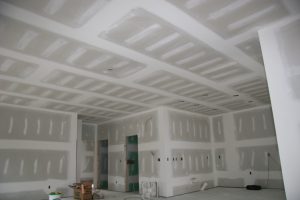
A critical, non-negotiable rule in our professional drywall installation process is that the board must be installed horizontally (perpendicular to the framing). We never install vertical boards. Horizontal drywall installation offers distinct advantages for moisture management and structural stability:
- Fewer Seams: Horizontal installation typically results in a 25% reduction in total seam length compared to vertical hanging. Fewer seams mean fewer vulnerable points where moisture can penetrate the wall assembly.
- Stronger, Airtight Joints: Because horizontal seams fall at a comfortable working height, our professional drywallers can tape, mud, and feather the joints with absolute precision. A perfectly sealed joint prevents ambient humidity from reaching the vulnerable edges of the gypsum board.
- Structural Bridging: Horizontal boards tie more wall studs together, increasing the shear strength of the wall. In older Victoria homes where framing may have shifted over decades, horizontal boarding bridges irregularities, preventing the drywall from cracking.
- Keeping Edges Off the Floor (Capillary Break): By starting the bottom horizontal board a half-inch off the subfloor, we create a capillary break. If a minor plumbing leak occurs or condensation runs down the wall, the drywall will not wick up the standing water.
During the taping phase, we utilize high-quality, moisture-resistant setting-type joint compounds for the initial coats. These chemically curing compounds do not re-emulsify when exposed to water, ensuring that even in a steamy Saanich bathroom, the horizontal seams remain rock solid.
Room-by-Room Moisture Management Guide
Different areas of your home face different moisture challenges. Whether we are doing material estimations for a 13,500 square foot custom build or a localized renovation, here is how we approach specific zones:
1. Bathrooms and Ensuites
Bathrooms are the most hostile indoor environments for interior finishes.
- Drywall: Glass-mat panels behind all tile; Purple board for the remaining walls and ceiling.
- Finishing: A Level 5 finish is often recommended for modern bathrooms with extensive directional lighting, providing a uniform, non-porous surface.
- Paint: A high-quality vapor-retarding primer followed by a premium acrylic latex bathroom paint with anti-microbial additives (satin or semi-gloss finish).
2. Kitchens
Kitchens deal with boiling water, steam from dishwashers, and grease.
- Drywall: Green board or Purple board behind the sink, stove, and dishwasher areas.
- Finishing: Meticulous seam finishing around cabinetry to ensure no raw gypsum edges are exposed to steam.
- Paint: Highly washable, 100% acrylic latex paint in an eggshell or satin finish.
3. Basements and Crawlspaces
Victoria basements are notorious for high humidity levels due to hydrostatic pressure from the surrounding damp soil.
- Drywall: Purple moisture resistant drywall in Victoria BC basements is essential. Never use standard drywall against foundation walls.
- Installation: Strict horizontal boarding, maintaining a gap between the drywall and the concrete floor.
- Paint: Breathable acrylic latex paint to avoid trapping moisture inside the wall assembly.
The Crucial Role of Primers and Professional Painting
Moisture resistant drywall in Victoria BC is only as good as the coating that protects it. Professional painting is the final weatherproofing seal on your interior walls.
Sealing the Porosity
New drywall and joint compound are highly porous. Without a dedicated high-build drywall primer, the topcoat of paint will soak unevenly into the surface, creating flashing and leaving the drywall vulnerable to humidity. We use sealing primers that lock down the surface and create a uniform, moisture-blocking film.
Acrylic Latex vs. Oil-Based Paints
For wet climates, 100% acrylic latex paint is vastly superior to traditional oil-based alkyd paints for interior walls. Oil paints dry to a hard, brittle finish and provide a nutrient source for mildew. High-quality acrylic latex remains flexible, allowing it to expand and contract with the home as humidity levels fluctuate throughout the year. Premium interior acrylics formulated for the Pacific Northwest also contain potent mildewcides that actively prevent mold growth on the paint film.
Recognizing Existing Moisture Issues
As a homeowner in Victoria, watch for these warning signs of moisture damage:
- Bubbling or Peeling Paint: Indicates moisture is trapped behind the paint film, breaking the adhesion.
- Nail Pops: If wood framing absorbs moisture and swells, it pushes the drywall screws outward.
- Dark Stains: Yellow, brown, or black stains on ceilings or walls indicate water infiltration.
- Musty Odours: You will often smell hidden mold inside the wall cavity before you see it.
Painting over these issues is never the solution. The source of the moisture must be stopped. Once dry, the compromised area must be cut out, replaced with moisture resistant drywall, installed horizontally, seamlessly taped, and properly primed.
Investing in Long-Term Protection
Protecting your home from our coastal climate requires technical knowledge, the right materials, and flawless execution. From understanding the complexities of the BC Building Code regarding fireproofing suites with Sonopan and resilient channels, to executing precise horizontal drywall installations and Level 5 finishes, every step matters.
Choosing contractors who understand the nuances of moisture management is an investment in the longevity and safety of your property. By pairing proper moisture resistant drywall in Victoria BC with superior acrylic latex paints, you create an interior environment that is structurally secure against the relentless dampness of the West Coast.
Frequently Asked Questions
What is the best moisture resistant drywall in Victoria BC for a basement suite?
For basement suites in Greater Victoria, Purple board is highly recommended. It features a water-resistant gypsum core and a specialized anti-microbial paper facing that prevents mold and mildew from growing. If fire separation is required by the BC Building Code, 5/8″ Type X drywall must be used, properly isolated with resilient channels.
Can I paint directly over moisture-resistant drywall?
No. Moisture resistant drywall in Victoria BC has a specially treated facing that varies in porosity compared to joint compound. If you apply paint directly without a dedicated drywall primer, the paint will absorb unevenly, causing a blotchy appearance and weakening the moisture seal.
Why do you mandate horizontal drywall installation?
Horizontal boarding must be used because it drastically reduces the overall length of seams, minimizing vulnerable joint lines where moisture can seep into a wall. It also results in stronger walls by bridging multiple studs together, which is crucial for structural integrity.
Does a higher paint sheen provide better moisture resistance?
Yes. Glossier sheens—like satin, semi-gloss, and high-gloss—dry to a harder, tighter film. This tight film repels water droplets and condensation, causing moisture to run off rather than soak into the substrate. Flat paints are too porous for high-moisture environments.
How do I stop mold from forming on my bathroom ceiling?
Preventing bathroom ceiling mold requires a three-pronged approach: install a properly rated