Here is the complete article, professionally formatted with headings, bullet points for readability, and the 4 requested hyperlinks (2 internal to finestfinish.ca and 2 external to authoritative sources) strategically placed within the text:
Why Do Drywall Cracks Keep Coming Back? A Victoria Drywaller Explains
You repaired the crack. It looked perfect. The wall was painted. Then a few months later, there it is again. Sometimes it returns in exactly the same location. Sometimes it shows up as a fine hairline crack extending beyond the original repair.
For homeowners, it can be incredibly frustrating. But there is an important reason this happens: The crack you see on the surface is not always the actual problem.
Drywall is part of a larger building system. Framing moves. Different materials expand and contract differently. Moisture changes. Poorly supported joints flex. Previous repairs may have covered the symptom without correcting what caused it.
At Finest Finish Painting & Drywall, recurring cracks are something our journeyman drywall team encounters regularly throughout Victoria, Oak Bay, Fairfield, Saanich and surrounding communities.
The goal isn’t simply to make a crack disappear today. The goal is to understand why it appeared in the first place — and build the repair accordingly.
1. Building Movement Can Reopen a Drywall Crack
Homes move. Not dramatically in most cases, but enough that drywall can show the effects. Wood framing responds to changes in moisture, temperature and building loads. Renovations can also introduce new transitions between old and new framing.
Small amounts of movement that are completely invisible inside the wall can become visible at the finished surface. This is one reason repeatedly filling a crack with joint compound may not solve the problem. The compound hides the crack. It doesn’t necessarily stop the movement underneath it. When movement continues, the weakest point can open again.
Common areas where we see movement-related cracking include:
Wall-to-ceiling transitions
Door and window corners
Long ceiling joints
Additions meeting original construction
Renovated openings
Changes between different substrates
Areas where framing or backing is limited
A successful repair therefore begins with asking: What is actually moving here?
2. Poor Backing Can Allow the Drywall to Flex
This is one of the details homeowners almost never see once the repair is complete. Drywall needs proper support. If two drywall edges meet without adequate backing or fastening, movement can occur between the panels.
That movement may be tiny. But drywall finishing materials are not designed to compensate indefinitely for an unstable joint. This becomes especially important when repairing holes or sections removed by plumbers, electricians or other trades. Simply placing a piece of drywall into the opening and coating over it isn’t necessarily enough.
Where conditions require it, we install appropriate backing so the repaired area becomes properly supported. Once everything is finished and painted, you won’t see that backing. But the repair may depend on it. That’s an important difference between treating drywall as a cosmetic surface and treating it as part of a complete assembly.
3. The Original Tape Joint May Have Failed
Many drywall cracks follow an existing joint. That isn’t a coincidence. Drywall panels are connected using tape embedded within a finishing compound. When properly installed, the tape helps distribute movement across the joint.
But joints can fail for several reasons:
The tape may not have been properly embedded.
There may have been insufficient compound beneath it.
The material may have become loose.
Moisture may have affected the joint.
Or repeated movement may have exceeded what the original joint could tolerate.
If the tape beneath the crack is already compromised, simply spreading new compound over the surface can leave the underlying failure untouched. The crack disappears. The original weak joint remains. And eventually, the surface may tell you about it again.
4. Previous Repairs Sometimes Treat the Crack Instead of the Cause
This is probably one of the most common reasons homeowners call us after a crack has already been repaired. Someone sees a crack. They apply compound. They sand it. They paint it. Done.
Except sometimes it isn’t.
A recurring crack may require opening the damaged area enough to determine what is happening underneath. Loose material may need to be removed. A failed joint may need reinforcement. Backing may need to be added. The surrounding surface may require additional preparation. The correct solution depends entirely on the conditions we find. There is no single product that magically fixes every drywall crack. Diagnosis comes first.
5. Different Building Materials Can Move Differently
Older homes and renovated properties are especially interesting because one finished surface may contain several different materials. You can encounter combinations of:
Modern drywall
Older gypsum board
Plaster
Wood framing
Concrete or masonry
Previous patches
New additions connected to old construction
Each material behaves differently. When two materials meet, that transition can become a natural stress point. Victoria has a large inventory of older and renovated homes, particularly in areas such as Oak Bay, Fairfield and established neighbourhoods throughout the city.
We’ve encountered many situations where a crack isn’t simply occurring “in the drywall.” It’s occurring where two different assemblies meet. That changes how the repair should be approached.
6. Moisture Can Create Problems That Look Like Drywall Failure
Sometimes the drywall isn’t the original problem at all. Water from a roof leak, plumbing leak, condensation issue or previous moisture event can damage drywall and finishing materials.
Before repairing those areas, the source of the moisture needs to be understood and corrected. Otherwise, you’re repairing the evidence while leaving the cause untouched. Watch for signs such as:
Yellow or brown staining
Soft drywall
Bubbling paint
Swollen joints
Sagging
Material that feels loose
Cracks associated with an obvious water event
Drywall should generally not be closed back up until the underlying moisture issue has been addressed appropriately.
7. Door and Window Corners Are Natural Stress Points
Ever notice how cracks frequently begin at the corner of a door or window? Openings interrupt the continuity of the wall. Framing loads and movement can concentrate around those locations.
That’s why cracks extending diagonally from door and window corners deserve a little more attention than simply filling the visible line. Sometimes they are minor finishing issues. Sometimes they reflect movement occurring around the opening. And occasionally a cracking pattern may warrant evaluation beyond drywall repair. A drywall contractor should know when they’re looking at a finishing problem — and when the homeowner should consider investigating something further.
8. Not Every Crack Is Just a Drywall Problem
This distinction matters. Most small drywall cracks aren’t automatically evidence of serious structural trouble. But drywall can reveal movement occurring elsewhere in the building. You should consider further investigation if you’re seeing things such as:
Rapidly widening cracks
Significant or repeated movement
Multiple cracks appearing together
Doors or windows suddenly binding
Noticeable floor or ceiling movement
Significant ceiling sagging
Water intrusion
Large cracks associated with other building changes
In those situations, simply repairing the drywall may be premature. The underlying building condition should be understood first.
Why Does the Same Crack Keep Coming Back?
Usually, one of two things has happened:
The underlying movement is still occurring. or
The original repair didn’t adequately address the weak point underneath the surface.
Sometimes both are true. That’s why our first question isn’t: “What compound should we put on this?” It’s: “Why is this cracking?” The finishing materials come afterward.
What Does a Proper Drywall Crack Repair Look Like?
Every repair is different, but a professional process may involve several steps:
Inspect the crack: We look at where it’s occurring, the direction it runs, nearby joints, openings, previous repairs and any evidence of movement or moisture.
Determine whether the surrounding drywall is stable: Before refinishing the surface, the assembly beneath it needs to make sense.
Remove loose or failed material: Building a new finish over material that has already lost its bond doesn’t create a strong foundation.
Add support when required: Where insufficient support contributes to movement, appropriate backing or fastening may be required.
Reinforce the damaged area: Depending on the crack and substrate, reinforcement may be required rather than simply covering the line with compound.
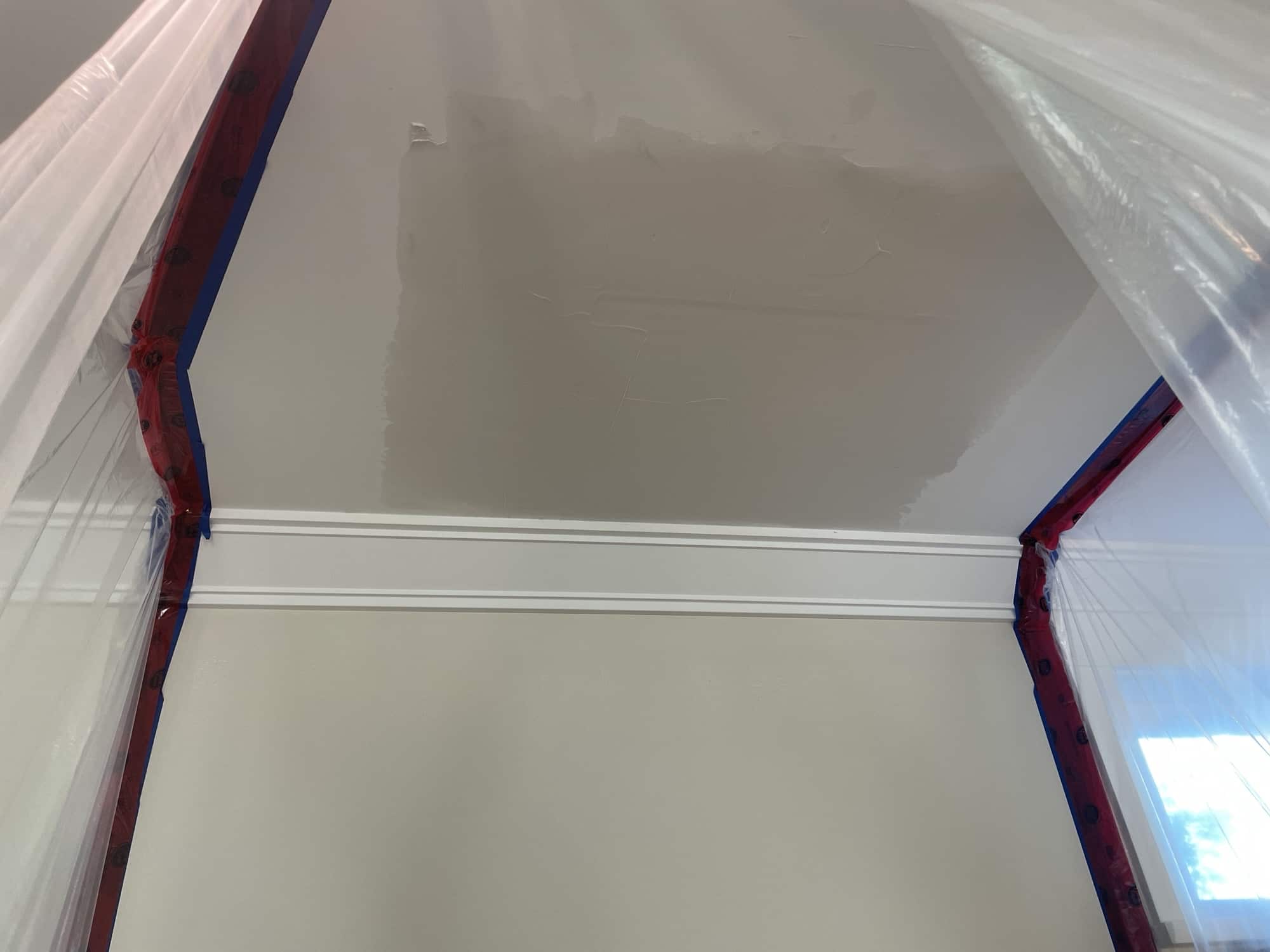
Rebuild the surface: The repair is gradually feathered into the surrounding wall or ceiling so the transition disappears visually.
Prepare for paint: Good drywall work should leave the painter with a properly prepared substrate — not a repair they have to hide.
The Repair Should Disappear
A technically sound repair is only half the job. The other half is making it disappear. Poorly finished drywall repairs can leave:
Raised patches
Visible edges
Different surface textures
Flashing under paint
Humps or depressions
Visible sanding marks
Joints that become obvious under natural light
And the smoother and more premium the final paint finish becomes, the easier many imperfections are to see. That’s why high-end drywall repair requires more than filling a hole or closing a crack. The repaired area needs to become visually integrated with the surrounding surface. When we’re finished, the goal is for someone entering the room to have no idea where the repair occurred.
Why Premium Drywall Repair Costs More
Homeowners sometimes receive dramatically different quotes for what appears to be the same repair. But the scope may not actually be the same.
One contractor might: Patch → coat → sand → leave.
Another repair may involve: Inspection → stabilization → backing → reinforcement → surface preparation → multiple finishing stages → blending → final inspection.
Those aren’t the same job. At Finest Finish, we aren’t trying to be the cheapest drywall contractor in Victoria. Our work is aimed at homeowners, renovators and contractors who prioritize workmanship, longevity and the finished result. The steps underneath the paint often determine whether the job still looks good years later.
Drywall Repair in Victoria, Oak Bay, Fairfield & Saanich
Finest Finish Painting & Drywall provides professional drywall repair and finishing throughout Greater Victoria. Our work includes:
Recurring drywall cracks & ceiling cracks
Failed previous repairs
Plumbing and electrical patches
Water-damaged drywall
Wall and ceiling repairs
Renovation drywall
Skim coating & surface refinishing
Difficult transitions & high-end finishing
Our team approaches repairs as a complete system rather than simply covering visible damage. Journeyman craftsmanship. Proper preparation. No unnecessary shortcuts.
Have a Drywall Crack That Keeps Coming Back?
If you’ve already repaired the same crack once — or more than once — it may be time to look beyond the surface. Send us photos or request a detailed quote and we’ll help determine the right approach for your home.
Finest Finish Painting & Drywall Victoria, BC 250-686-9483 Request a Detailed Drywall Repair Quote
Frequently Asked Questions
Is it normal for drywall cracks to come back? It can happen when the underlying area continues to move or when the original repair addressed only the visible crack rather than the condition beneath it.
Can I just fill a drywall crack with compound? Small cosmetic cracks can sometimes be repaired simply, but repeatedly filling a recurring crack without determining why it’s happening can result in the crack returning.
Why do drywall cracks appear above doors? Doors and windows interrupt the wall framing and can concentrate movement around their corners. These locations are common areas for visible cracking.
Are ceiling cracks dangerous? Many ceiling cracks are related to drywall joints or normal building movement, but cracking combined with sagging, water damage, significant movement or other changes should be investigated before cosmetic repair.
Can drywall cracks be permanently repaired? Many recurring cracks can be significantly improved when the underlying cause can be identified and addressed. However, no contractor should promise that every crack will never return without considering ongoing building movement and the specific conditions involved.
Why can I see my old drywall repair after painting? Poor feathering, surface texture differences, sanding marks, raised edges or differences in porosity can make repairs visible after paint — particularly under strong natural or directional lighting.
Do you repair drywall cracks in Oak Bay and Fairfield? Yes. Finest Finish provides drywall repair and finishing throughout Victoria, Oak Bay, Fairfield, Saanich and surrounding Greater Victoria communities.